
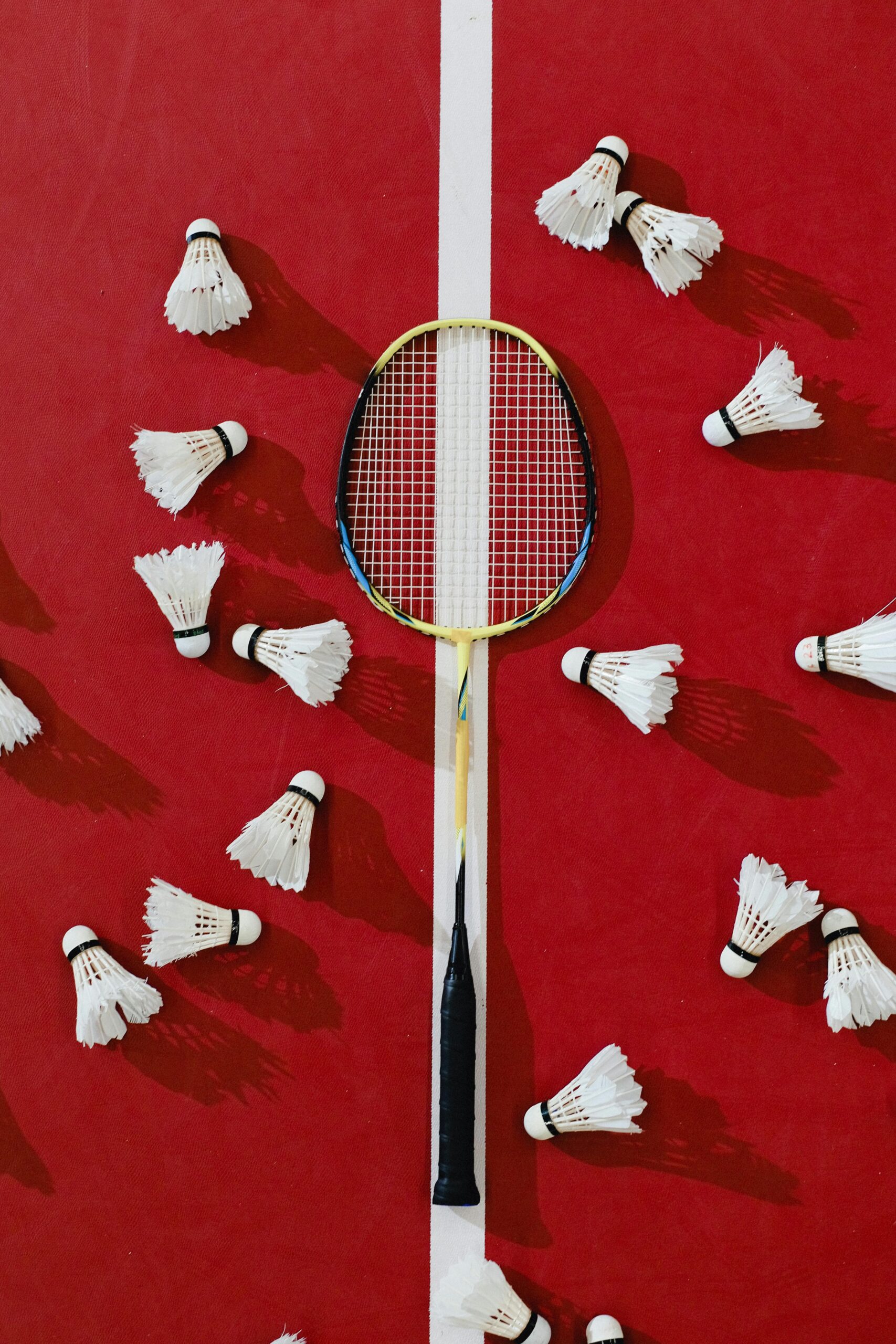
There is a saying that life is constant maintenance… Just like that, our racket’s life is also dependent on how we maintain it.
You spend big bucks to get your best badminton racket, and you want it to last long and deliver the most value for your hard-earned cash. That’s why it pays to know what can potentially damage your badminton racket, and what to do to avoid such situations.
Earlier, weaknesses in the t-joint frame were the biggest culprits for badminton racket damage, but the issue has been rectified over the years. Today’s badminton rackets are designed to ideally stay put for over five years, but most of them last around 3 years.
firstly let’s see what are the main reason for rackets to get damaged:
Reason #1: Extremely High String Tension
The most common culprit for badminton racket frame damage is very high string tension and this is also the most common reason all shoulder problems happen due to the game. If they aren’t strung in a proper way, extremely tight strings can break or cause the racket frame to crack.
At lower string tension, the badminton racket (and of course the strings) are poised to last longer, and are less vulnerable to cracking/breakage when you hit on the side of the string bed. Only elite players may use very high string tensions.
Reason
#2: Incorrect/Poor Handling
If you don’t smash at the cork or handle your racket properly it can fall off your grip and hit a hard surface. The result isn’t always good. If the badminton racket hits the ground frame first, it can snap in two, crack or break in many parts.
Reason
#3: Broken Grommets
Grommets are small tubes that dot around the frame of the racket. They are designed for the string to pass through them, so they can protect both the frame from being sliced by tight strings. If the grommets are loose, broken or missing, they should be replaced. If not the string will start through the frame causing it to buckle or break.
Reason
#4: Clashing
This is the most obvious reason for racket frame damage. This is especially true if you play with your partner in doubles. At some point (which is more often than not), your rackets will clash.
Depending on the force you put to the smash in question, the clash can cause insignificant to serious damage to the frame. A strong direct clash, for instance, can make the frame buckle, bend or lose its elegant isometric shape.Light clash, on the other hand, can cause the paint to come off the frame, while extensive or repeated damage can make the strings become loose.
Of course, if the collision of the rackets is too much, the frame can crack, or even worse break into pieces. In most cases, the racket damage from a clash can be remedied by a professional.
The frames will be reshaped, the strings will obviously be retightened, and new grommets might be installed to prevent tight strings from slices through the frame. and now, lets see how you can protect and maintain your racket:
1. Storing Your Racket
How you store your racket will also determine its lifespan. You want to make sure that your racket is well cushioned and placed in a cool dry space.
Keeping your racket in a case and placing it inside of a bag would be the optimal setting to provide maximum cushioning and support for your racket. This will help prevent damage that may occur to your racket.
2. Racket Frame
As I said earlier The frame of your badminton racket is the area where most damage occurs. The most common damage you will find are paint chips on the frame. Paint chips usually occur from racket clashes or from any type of impact on the frame. All in all, paint chips are not that serious of a problem and more of an aesthetic factor. One thing you should look out for are cracks on the racket frame. These are quite serious and usually shorten your rackets lifespan. Cracks are often found where there are paint chips because if the impact on the frame is strong enough to create a crack, the paint will definitely come off as well.
You can identify a crack on the racket as a thin black line which is quite noticeable since the racket frame will look gray once the paint has come off. The severity of the crack depends on the size and the depth of the crack.
3. Strings Attached
You must have seen lots of elite players cut their strings immediately once one string is out, it’s because even if one string is broken the tension in strings is distributed unequally that puts extra pressure on certain points on the frame and hence will change the shape of the racket’s head.
Badminton rackets can work well if the strings are in top condition. If the string tension is not according to your standards or the strings are broken, you cannot expect excellent performance.
So, it is essential to ensure the correct string tension of the badminton racket.
The string will get loose over a period of time. If the strings of your racket are broken or lose you should get re strung by professional stringer. Always use good quality multifilament strings. and string tension should be in the suggested range.
Strings are subject to wear and tear. It is very common that strings break while playing, to increase the life of strings, always keep your racket in a cover safely while not in use.
4. Grommets
Grommets are plastic cylindrical inserts around the circumference of the racket frame. Their job is to protect the racket head and prevent tight strings from damaging the frame. Any damaged or missing grommets should be replaced immediately because this can lead to further damage to the strings or frame.
5. Badminton Racket Gripping and Re-Gripping
Rackets come with a base grip which is pasted on a wooden handle and depending on the usage grip gets damaged. In order to maintain a good grip between your hand and racket you should replace the base grip every 2-3 months. to protect the base grip or to have a thicker grip depending on the size of your hand you can also use an over grip. And if your palm sweats a lot you can use a towel grip.
Few more things:
a) Keep your racket in a dry, cool environment to avoid damage to the frame and strings.
b) You can make use of racket frame protection tape available in the market. It can help you to increase the head weight of the racket.
c) Careful storage can ensure a longer-lasting racket. Never place a pointed, heavy or damaging item on the racket when carrying or storing it.
It’s the little things that always make the difference. If you take necessary steps for protecting your badminton racket, you will be able to use it for a very long time.
Good Luck,
Arundhati.