
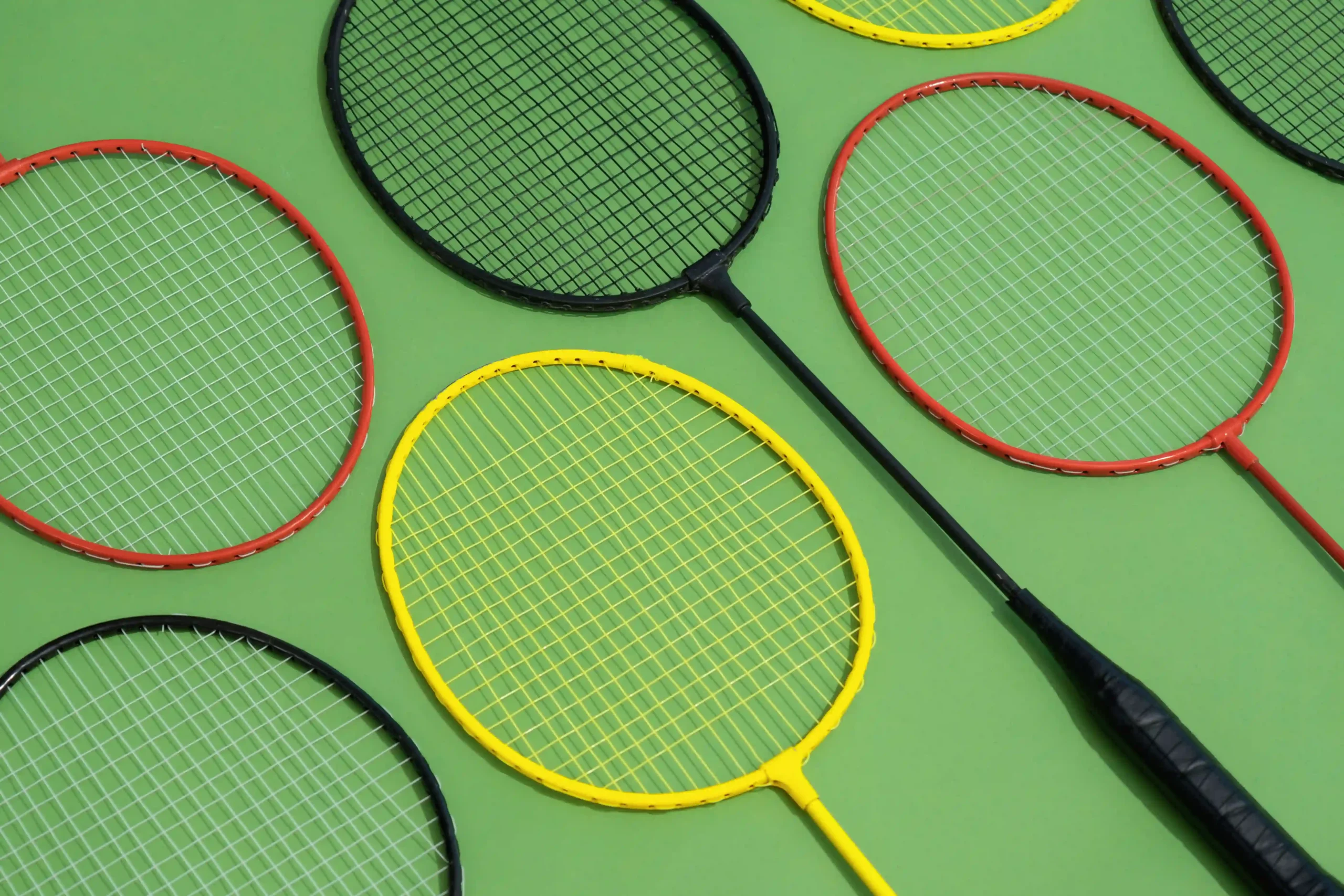
You must have heard the saying “I will let the racquet do the talking!”
With any racquet sport the single most important piece of equipment for any player is the racquet itself. Choosing a perfect racquet for you means choosing a perfect weapon for your arsenal.
Few years back there were pretty less choices and I remember my best racquet was ‘Yonex muscle power 99’ the “yellow one”. I won this racquet as a prize when I won the All India tournament and luckily it was the best suited for me considering my style of play. The racquet was evenly balanced with little weight towards the head which was perfect for my attacking game.
But these days there are many many options in the market which makes the decision of choosing a perfect racquet for you even more difficult. So here are a few things which you can consider before making a choice for a racquet which can do the talking for you on court.
Weight and head shape of the racquet
I remember playing with HS Prannoy’s racquet and damn! It was so heavy for me and I understood the little secret behind his very powerful smashes.
HEAVY WEIGHT RACQUET
A heavy racquet is considered a power racquet (2U/U). Heavier racquets create more power because there is more weight behind the stroke. Heavier racquets also require greater strength.
LIGHT WEIGHT RACQUET
Most standard badminton racquets usually weigh between 85 to 92 gram. Lighter weight means a greater speed of racquet movement and maneuverability. Light weight racquets generate less power. They simply do not have the weight behind them to thump the shuttle in the same way as the heavier racquets do.
OVAL SHAPE RACQUET
An oval head racquet has a smaller sweet spot (Sweet spot is the area of the racquet string bed that produces the most power, the best sound and the feeling and the least vibration when you hit on it) it delivers more power if that spot is hit. Oval racquets also provide better control giving the ability to place the shuttle in whatever you desire.
ISOMETRIC SHAPE RACQUET
An isometric shaped racquet has a more squarish head in comparison to an oval racquet. It has a larger sweet spot which makes it easier for beginner players to play more effectively. The large sweet spot makes it easier to hit a shot without exerting too much energy.So my recommendation for beginners is to start with a light weight racquet and then progress.
The weight of the racquet is really personal preference depending on your skill level, playing
style and physical capabilities.
String tension
I know most of you get confused about stringing part of the racquet. So here are a few tips to make it easy.
As string tension increases the sweet spot reduces and becomes more concentrated. So, recommended string tension for players would be as follows,
● For beginners 18 to 21 lbs
● For intermediate 22 to 24 lbs
● For advanced players 25 to 28 lbs
● For professionals 29 to 35 lbs
Grip size
“Any tool is a weapon if you hold it right!”
There are different types of grips and I will get to that in my coming blog but here I will talk about the grip size.
Most racquets come with a standard grip size of G4.
G5 grip size is specially designed for players with small sized hands while G1 G2 grip sizes are designed for players with relatively large hands. Smaller grip size will allow you to use more finger/wrist power and it is suited for the net game whereas bigger grip size will utilise more of the arm and suited for attacking game.
● G 1 4 inches
● G 2 3.75 inches
● G 3 3.50 inches
● G4 3.25 inches
● G5 3.00 inches
● G6 2.75 inches
Balance of the racquet
Racquet balance point refers to the weight distribution of the racquet and is determined by where the centre of balance lies in the racquet.
Balance type
● Head heavy
It feels heavier on the racquet head and yield more power in smashes Suitable for attacking playing style.
● Head light
These racquets feel overall lighter and more maneuverable than head heavy rackets Suitable for defensive playing style.
● Balanced
These racquets have an evenly distributed weight across the racquet and gives good feeling and flexibility to all round players.
Shaft flexibility
Shaft is the area between the handle and the string area of the frame.
The shaft of the racquet can be flexible or stiff.
Flexible racquets bend more easily during your swing whereas stiff racquets do not flex as much during a swing.
For beginners, flexible racquets are more suitable as they don’t have to exert extra power to play strong short since less strength is needed.
Material
Badminton racquets are made up of different types of material: wood, steel, aluminium, graphite, carbon fibre ect.
Racquet for singles or doubles
I am going to go out on a limb here and say you play both.
There is nothing in the rules about buying more than one racquet! You can buy racquets to suit either discipline. The reason I mention this is because generally certain racquets can be considered more geared towards singles and others suit doubles; of course whichever racquet you choose to play singles or doubles which is up to you and it would be wrong to class racquet only in this way but there are certain aspects of each game that might influence your choice and certain generalisation can be made.
The pace of singles is lower than in doubles. In particular, the shots per rally is also lower therefore having a heavier racket provides greater power to singles players who can utilise it when they need to. In doubles, if you are using a heavier racquet you might get more fatigued as you are playing more shots in a short amount of time. In addition singles demand a little more accuracy so typically players would opt for a stiffer shaft.
Meanwhile in doubles, one might choose a racquet that suits their main role in the partnership.A technically strong attacking rare court player would possibly prefer a head heavy racquet whereas a front court player might like a head light racquet. However they must also consider other aspects of the games such as defence, drives, etc… Ultimately it all comes down to preference.So above all the few things to look at when you want to buy a racquet online which can give you the best feeling and great experience of badminton.
Few more tips
● Don’t let your own misconception get in your way of what might be a better racquet for you.
● Don’t gender the racquet just because one is heavier doesn’t mean it’s more suited for boys and just because it’s a certain colour and lightweight doesn’t mean it’s better for girls.
● Just be honest with yourself about your game and justify in your own mind what attributes would be better for you and your level.
Good luck!
Thank you.
Arundhati Pantawane.